
"Although I’ve learnt to expect amazing handling in all Eagle E-Types, it is ever a surprise to get through corners that should see me sitting in a ditch."
Eagle E-Types has just released the Spyder, a development of the Speedster and Low Drag. Is it as good as it looks?
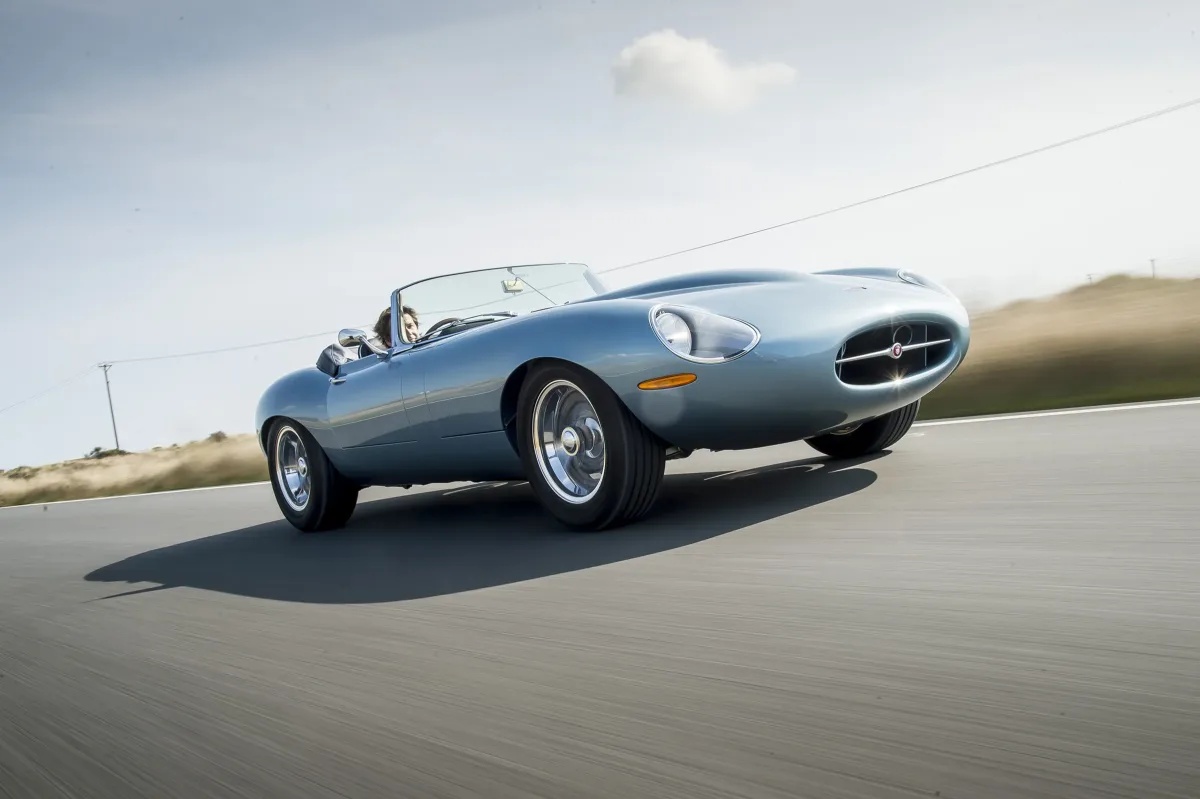
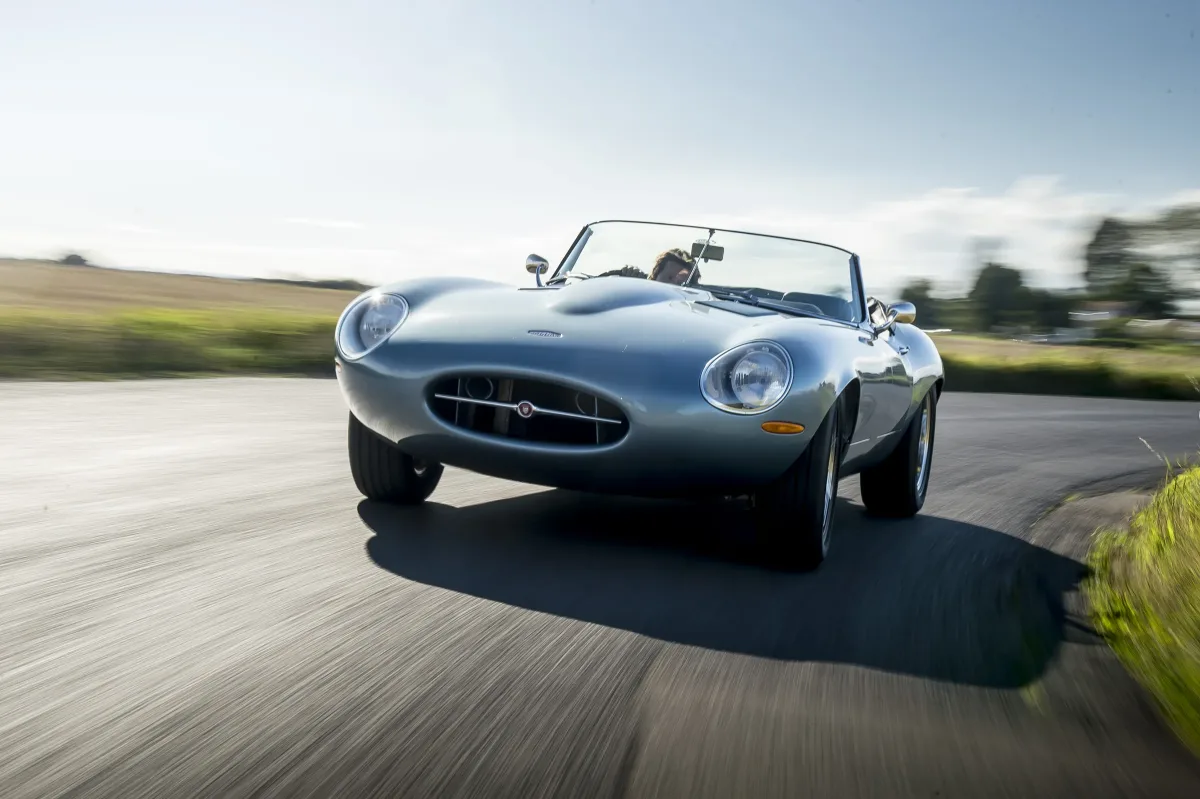
Where the conditions suit, he encourages me to stretch the Spyder, and I am simply stunned. The performance is shattering, making the quoted figures totally believable. Although I’ve learnt to expect amazing handling in all Eagle E-Types, it is ever a surprise to get through corners that should see me sitting in a ditch.
This is the best E-Type I have ever driven – and there have been many. Of course, just like the Speedster and Low Drag before it, it exceeds every expectation.
Spyder, Spyder. Elegant and grand. A drinker of souls. In the palm of my hand. The words by Los Angeles poet Robert Knight could have been written about Eagle’s new Spyder GT. It is certainly elegant, undeniably grand, and many would allow their souls to be drunk for a chance to have such a unique E-type in the palm of their hand.
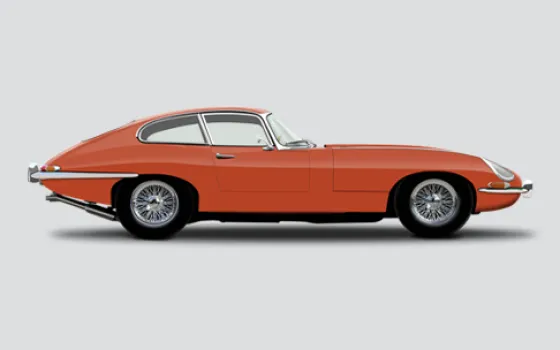
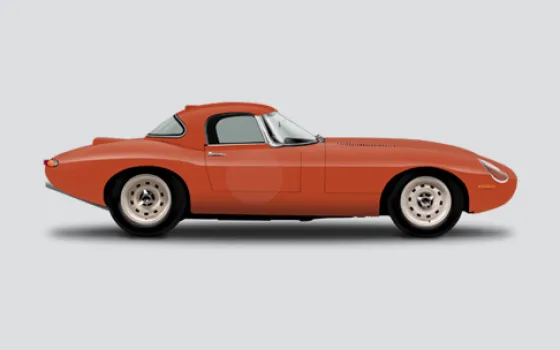
Surely trying to improve on Jaguar’s original E-type design is impossible? As many have found, such is its purity that most attempts detract rather than enhance. When Eagle E-Type’s Paul Brace was tasked with bringing something different to his designer’s board, the results were so dramatic they rocked convention. The Spyder GT is undeniably E-type, but rather than adopting the obvious on-steroids viewpoint, think blossoming and coming of age. It would have been as nothing, though, had there not been such a strong original design that allowed dynamics laid down at the end of the Fifties to be explored.
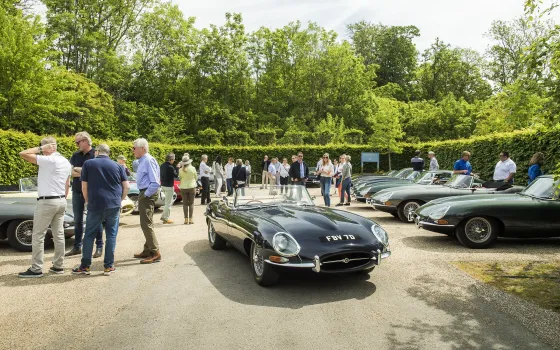
The latest Spyder GT is the culmination of a journey that went through Eagle E-Type, Low Drag, Speedster and now Spyder, although not necessarily in that order. Eagle E-Types has come a long way in its 30-year-plus history, and driven by single-minded determination, has produced some of the best cars ever. However, there remains a constant confusion that all E-types from Eagle are modernised cars. That simply isn’t so. The vast majority are stock E-types for sale, admittedly the very best, but they are not Eagle E-Types. Showroom cars are divided into standard or preservation, and although there is the opportunity to upgrade the cars to enhanced status, they would still not be an Eagle E-Type. These cars have their own Eagle chassis number allocated alongside the Jaguar number. John McLaren owns number one, and the figure currently exceeds 30.
It was back in 1991 when McLaren expressed a desire to own an E-type that could offer the same reliability as a Japanese supercar, with sufficient performance to comfortably tour a continent. It was enough to start the Eagle legend. The company’s founder, Henry Pearman, was determined to retain the E-type essence because his own expectations have always been extremely high, driving E-types on the limit.
In 1989, sharing his own E-type with Gordon Cruickshank (deputy editor of Motor Sport magazine) as co-driver, they won the Pirelli Marathon outright, beating Sir Stirling Moss, Paddy Hopkirk, Timo Makinen, Roger Clark and Ove Andersson in the process.
For Henry, the mighty XK engine that was supported in those race-inspired frames, along with independent rear suspension (IRS) and the pure shape, were dynamics too precious to alter. If an E-type for the new age was going to be produced, it had to be done without compromise and should perform on a level with current cars, making no apology for its age. Paul Brace joined Henry in 1989 and brought with him the engineering skills needed to advance the company. Today, he is the company’s design director.
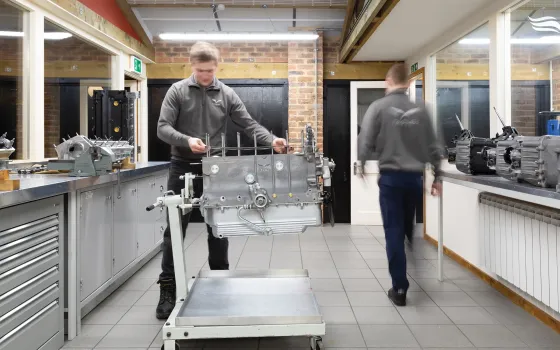
Development has been steady, with improvements added only when absolutely right. If certain commercially available parts are not up to standard, then Eagle commissions its own: from five-speed gearboxes to suspension and even alloy engine blocks with special dedicated wide-angle cylinder heads. Some 4,000 hours are needed for a single Eagle E-Type.
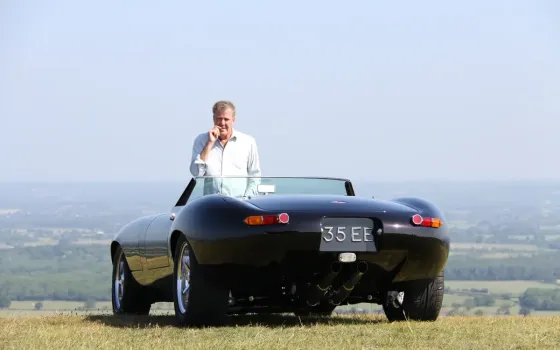
A few winced at the price, but more added their name to the growing waiting list, which is often over-subscribed and sometimes temporarily closed. The press loved the car. Jeremy Clarkson declared an Eagle E-Type his ‘car of the century’.
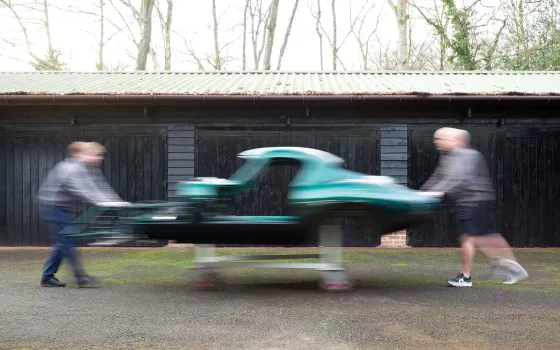
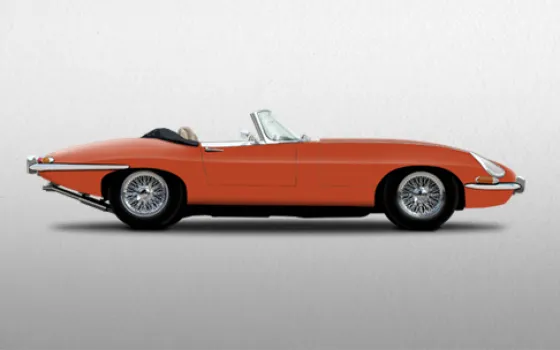
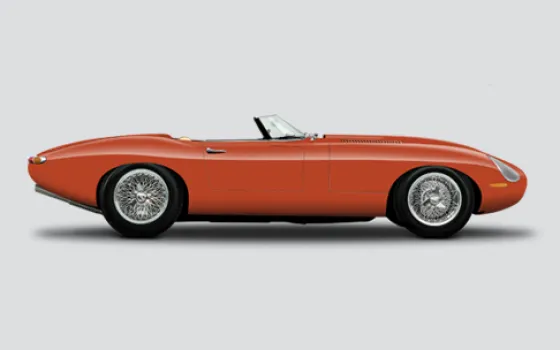
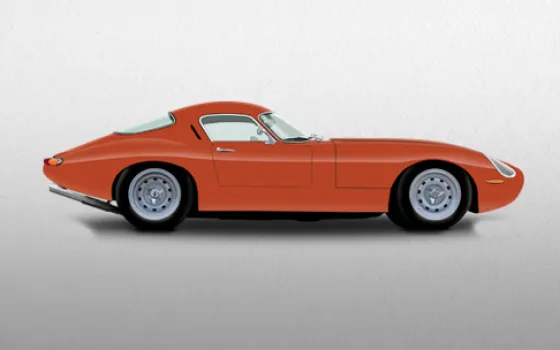
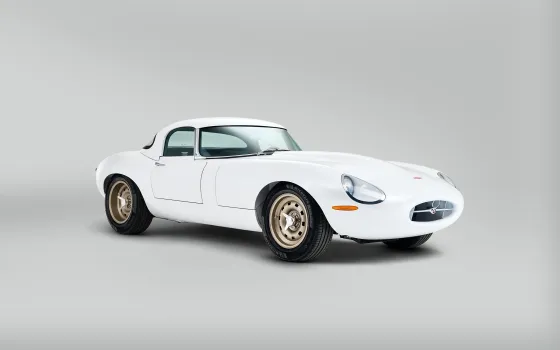
It was back in 1998 when the idea of an all-aluminium Low Drag Coupe was mooted, intended to be the ultimate long-distance tourer. A bodyshell was built, but with pressures on building regular Eagle E-Types, it was postponed – until Dr Rick Velaj cast his eye over the shape, and declared that he would love an open version. Paul Brace took to his easel and produced the uncompromised Speedster, a car we featured in November 2009. The Speedster sparked further demand, and proved the catalyst to finally finish the Low Drag Coupe (see JW, February 2014) that was to be even more sensational. The final incarnation has been on the easel since 2011, when a customer mused, ‘If only the Speedster had a hood...’ Paul sharpened his pencil once more and began a subtle redesign, anxious not to lose the poise and balance achieved in the previous cars.
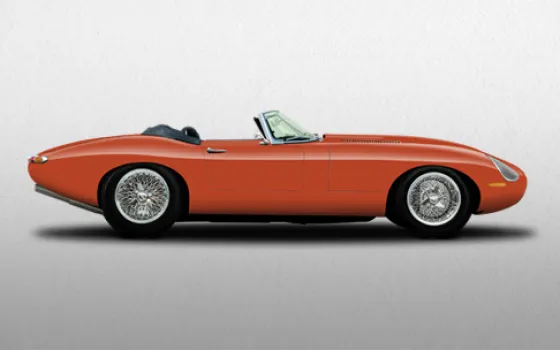
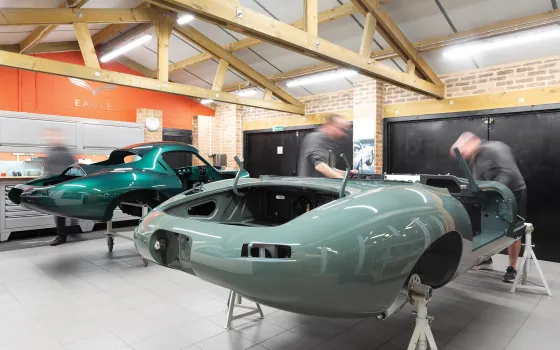
Like the Speedster and Low Drag GT before it, all begins with an original E-type, but with an all-aluminium body built to replace the steel. The shell is purpose-designed where, for instance, the floors are lowered to bring the seating position deeper into the shell. The very same engine frames so beloved by Pearman are retained, but new and strengthened. Aluminium is also used for the body and, although it is very much E-type, the curves are exaggerated: minimal at the front, and with more of a statement at the rear. Engine size is optional.
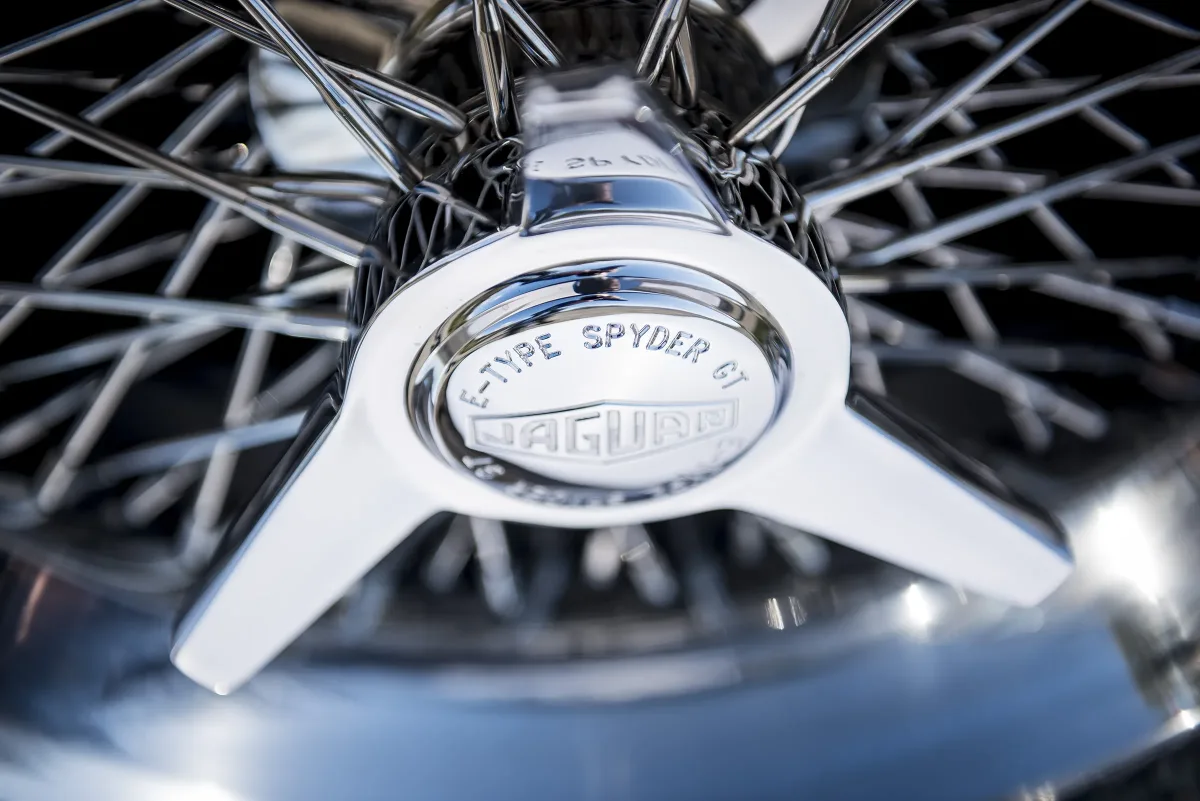
For this application, the customer has chosen Eagle’s own 4.7-litre engine, using a specially cast aluminium block and cylinder head, with a unique crankshaft. Still on traditional SU carburettors, power is a modest 330bhp @ 4,800rpm but with a whopping 340lb ft of torque @ 3,500rpm. The gearbox is Eagle’s own five-speeder driving a limited-slip differential, with both castings made from magnesium to keep weight down. In principle, the suspension remains Jaguar’s own, with Eagle refinements, using adjustable Ohlins all round for damping. Brakes are AP Racing four-pot calipers on the front, larger vented discs all round. Wire wheels are favoured, but have polished aluminium rims with stainless steel spokes. Tyres are 225/55 x 16 front and 235/60 x 16 rear. The hood frame is an adaptation of the Series 2 E-type, latching to a completely new windscreen cant rail. To achieve the desired rake, a new windscreen was commissioned, bringing the bottom edge of the screen forward. It is reckoned that the screen alone cost £3,000.
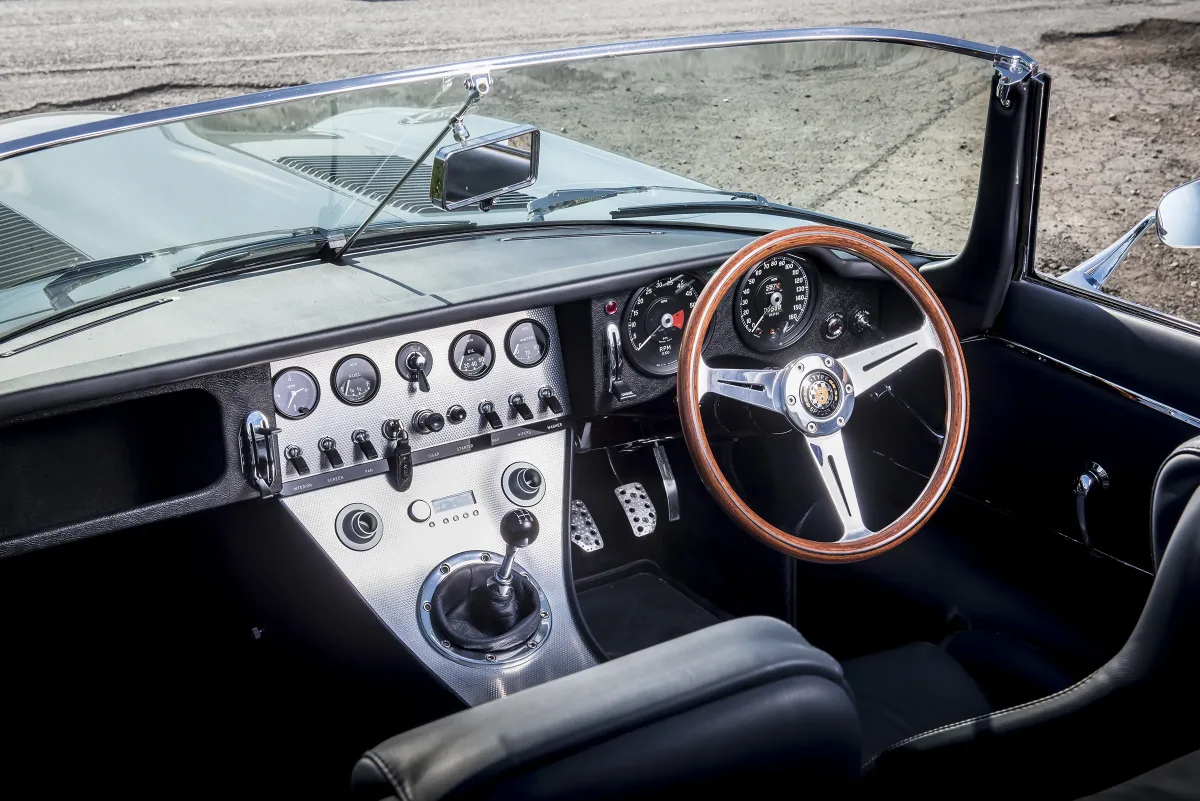
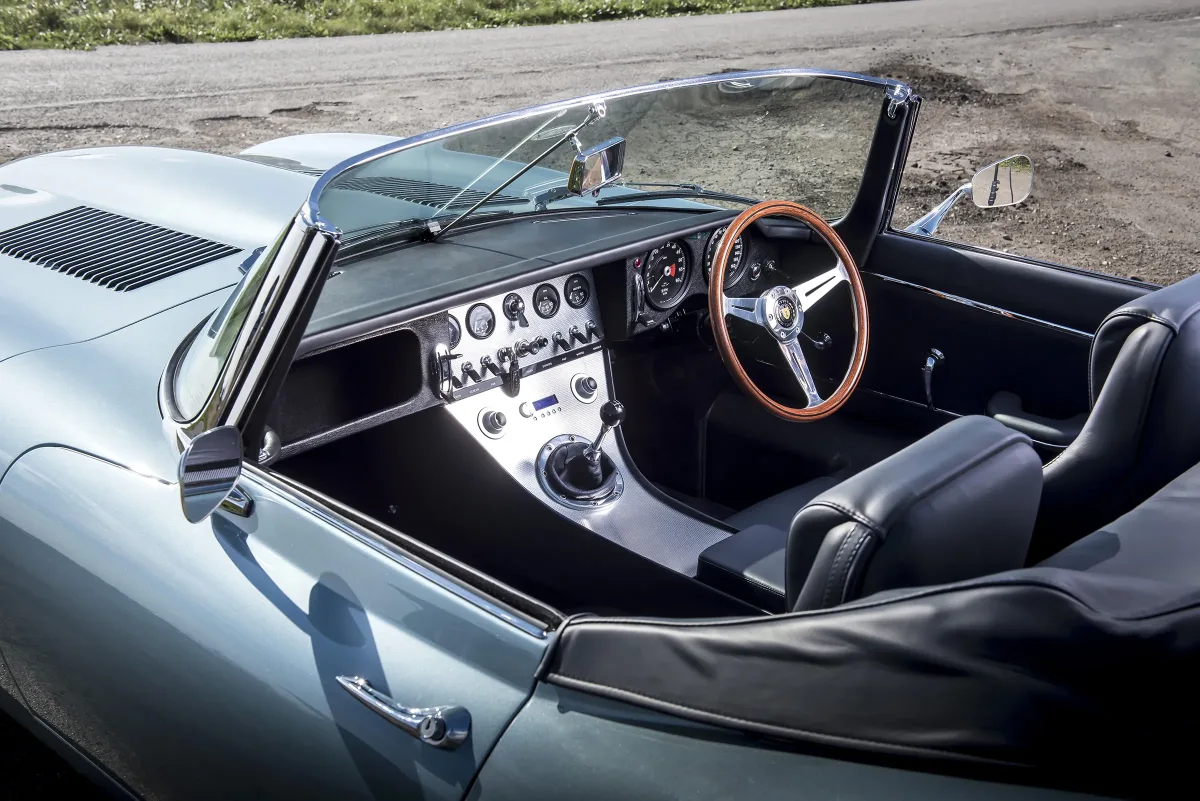
The inside is a masterful, modern interpretation of tradition.
All instruments remain faithful to the original, but, where a clock would have been housed in the rev-counter, it is now in the supplementary panel, replacing the ammeter (made redundant by the latest electronics). The same engineered dot-pattern aluminium, inspired by the early 3.8, is used for the centre dash, but instead of a radio tower and centre console, an attractive ski-slope design forms a striking replacement. Discreet air outlet swivel ports sit either side of a superb sound system, understated in its presence. There is a centre armrest, which cunningly hides a lift-and-drop handbrake lever and iPod socket. Eagle-developed seats complete the inside.
More than 6,000 man-hours go into the production of the Spyder GT. Despite, or because of, the car bristling with modern technology, weight is down to 1,029kg, compared to the original’s 1,232kg.
An air of tranquility around Eagle’s premises disguises the dedicated work behind the closed garage doors, which would not be out of place in a Homes and Gardens feature.
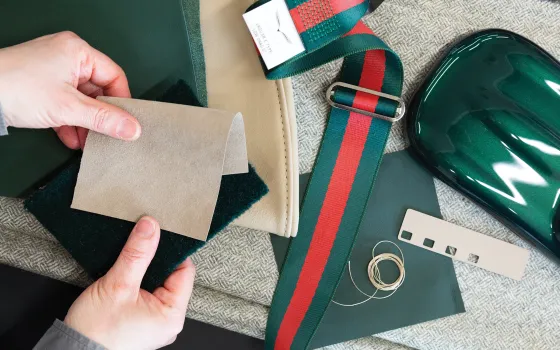
I meet Paul Brace in his development area, where modern art adorns the walls in place of the normal memorabilia. But then, this place is far from ordinary, and over the years I have learnt to expect the unexpected. Paul’s easel displays various sketches from his fertile mind, while hide samples and colour swatches adorn the tabletops as if carefully positioned by design.
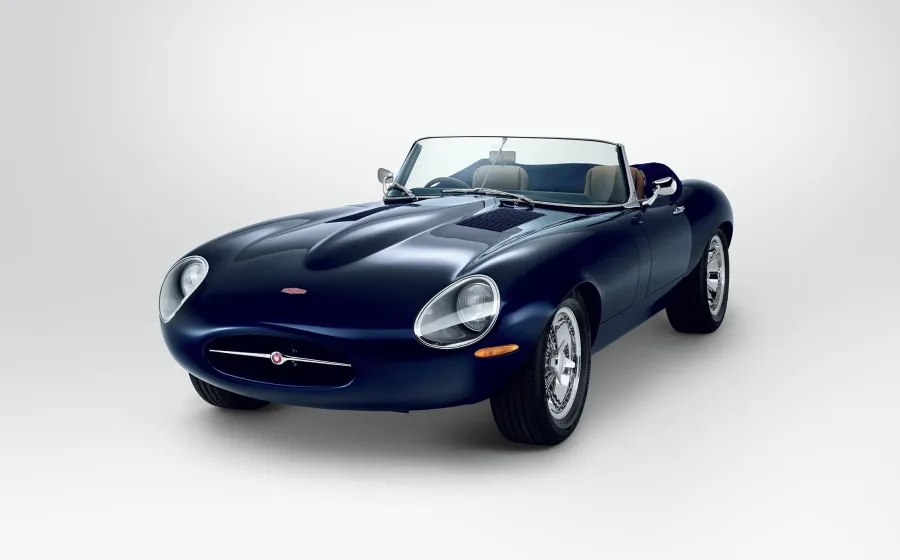
The Spyder GT sits on a floor so clean I am tempted to check the soles of my shoes before entering. My hand strokes the front and rear Jaguar badges, which are frenched into the body to avoid any protrusions, even if slight. The fuel flap is missing its finger lift; instead, this one is smooth – reacting to slight pressure to release the securing spring. I note the steep rake of the screen and the close proximity of the base to the bonnet. Just two wiper arms are needed to keep this glass free of rain.
In the open, the car takes on a different character as the sun brings the delicate chips in the paint alight, twinkling in the rays. Paul will be with me in the Spyder’s passenger seat, and, choosing to drive open, we lower the hood in the conventional manual fashion (almost as quick as an electric motor). A leather cover (matching the interior) hides the slight stack of the hood frame. The rear haunches offer a degree of aggressiveness, but not in a hard way; the form is too sensuous.
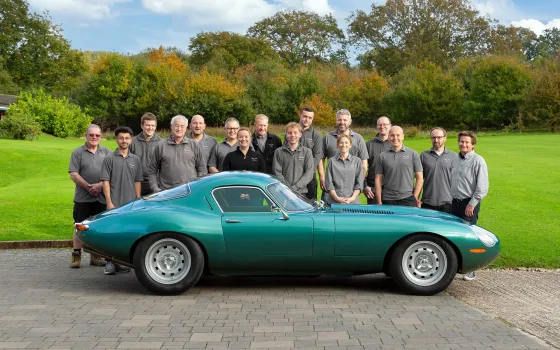
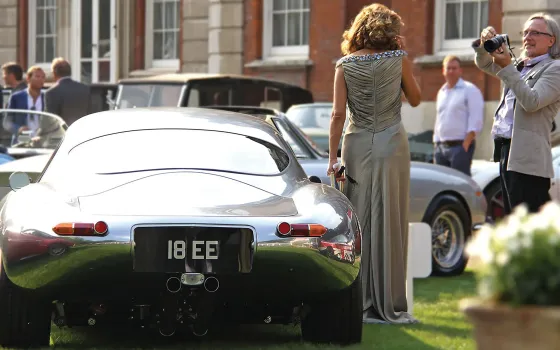
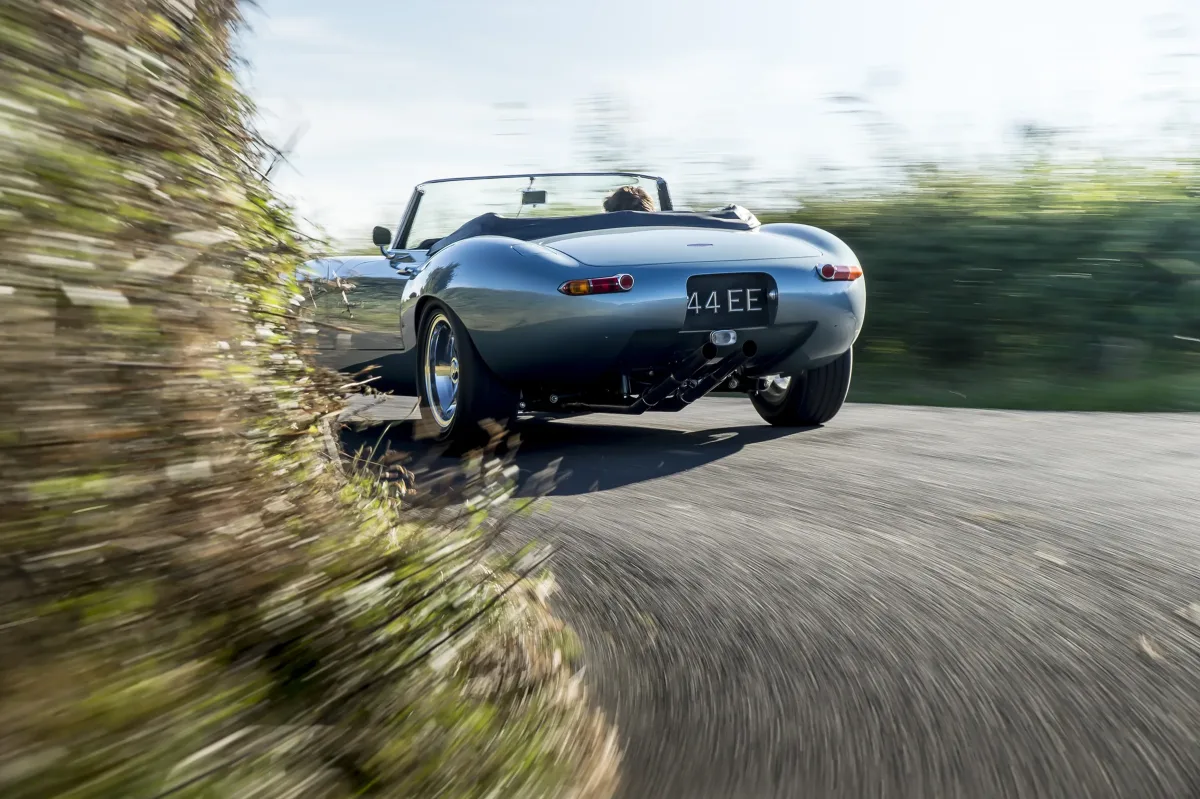
My eyes flow over the car from the front, which is devoid of bumpers, and across the fared-in headlights – smooth with a small chrome surround to keep visual and actual air flow impact to a minimum. There’s a very slight flare to the front wheelarch, while the bonnet louvres are inset, a gesture to the early 3.8-litre cars. Doors appear standard. The rear erupts into a free flow of movement as the wing swells to cover the wheels. The motion continues unhampered to the back of the car, around the small licence plate holder. It is simply stunning. Marginally shorter, due to the absence of bumpers, and wider through the track, symmetry is assured.
Easing into the seat, which is lower than standard, is to sit in perfect comfort, wrapped inside the car rather than merely sitting behind the wheel.
The engine fires and initially sounds like any other XK unit. Expectations might suggest a less-refined power plant, but such is Eagle’s determined engineering, it’s as smooth as the most docile 3.4. I’m told that the theoretical top speed is akin to modern supercars, but, with drag confronting science, it’s a more realistic 170mph, with less than five seconds passing before the speed hits 60mph. However, wearing a price tag just shy of £700,000, I will not be exploring those limits today.
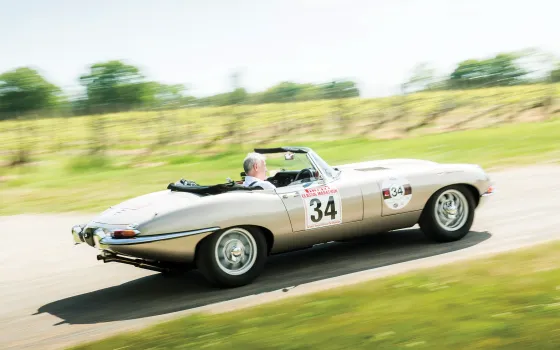
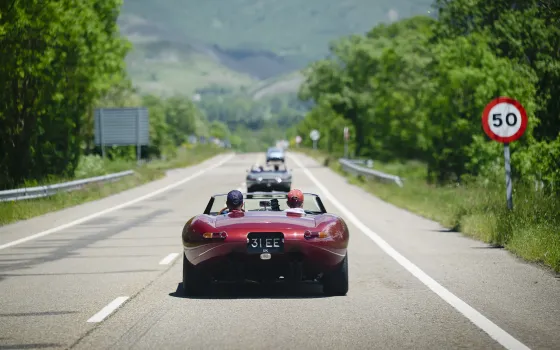
Seeking empty roads to at least tease the potential, we go hunting. Paul chats away about everything from our shared interest in Seventies motorbikes to the unsettling effects of dialling in even the slightest imbalance into a car’s rebuild. Where the conditions suit, he encourages me to stretch the Spyder, and I am simply stunned. The performance is shattering, making the quoted figures totally believable. Although I’ve learnt to expect amazing handling in all Eagle E-Types, it is ever a surprise to get through corners that should see me sitting in a ditch. Such is the torque that power builds even in fourth gear, and acceleration kicks like a sophisticated mule. Those huge brakes eradicate the speed so quickly that practiced judgement can choose the perfect entry speed for most bends and, with no correction to worry about, powering out is like no other E-Type I’ve driven.